
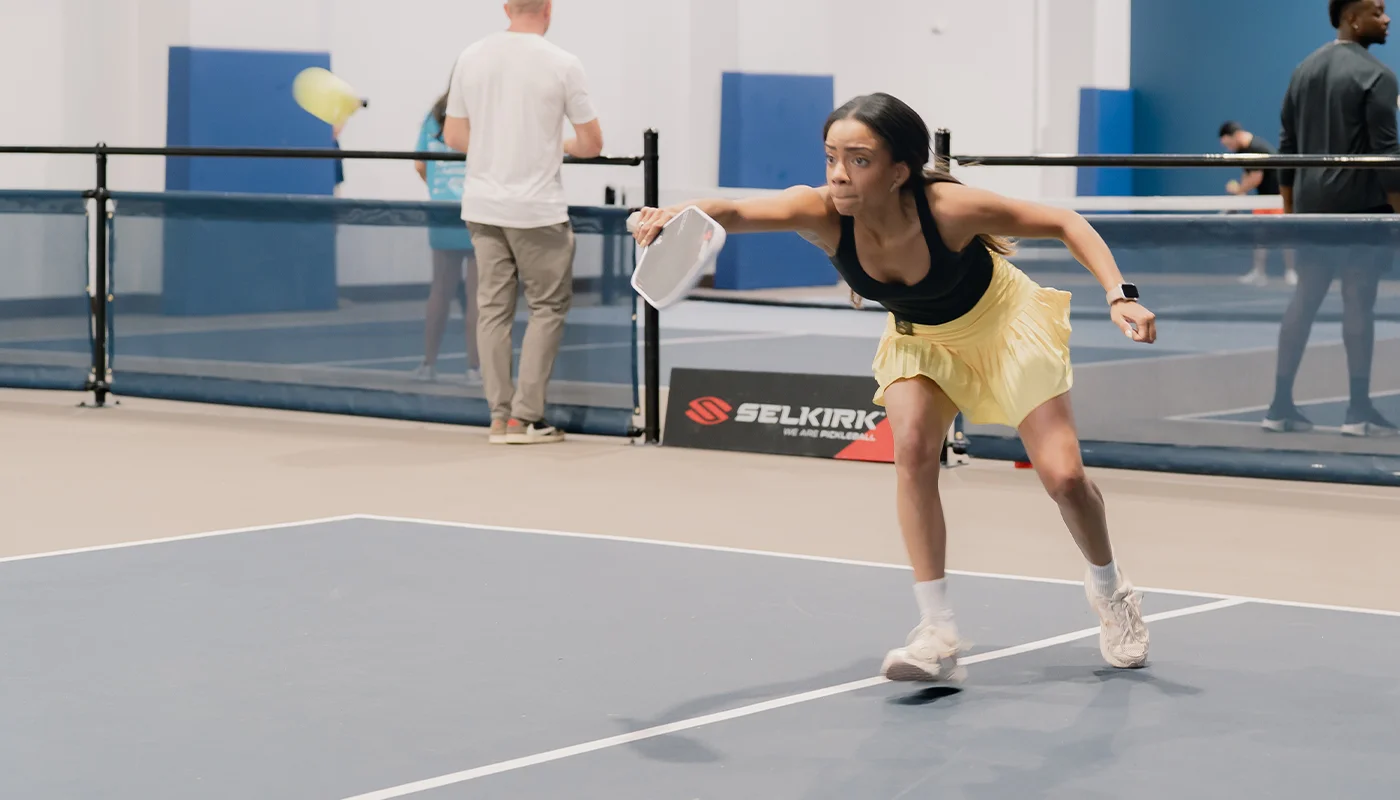
The dink is one of the most important shots in pickleball and one of the most misunderstood by newer players. It is not about hitting the ball; it is about guiding it. A well-executed dink lands softly just past the net, inside your opponent’s kitchen, keeping the ball low and forcing your opponent to hit upward, limiting their ability to attack.
Learning proper dink technique means slowing down and focusing on control rather than power. This guide breaks down the correct grip, stance, and paddle motion, along with the most common mistakes players make and how to fix them.
What Is a Dink in Pickleball?
A dink is a soft shot hit from near the kitchen line that arcs gently over the net and lands in the opponent’s non-volley zone. It is not meant to be aggressive or powerful. Instead, it is designed to keep the ball low so your opponent cannot attack it, forcing them into a defensive position during close-net exchanges.
The non-volley zone, commonly called the kitchen, plays a direct role in why dinking exists as a shot in the first place. Because players cannot volley while standing inside this zone, dinking creates a controlled back-and-forth exchange where patience and precision matter far more than power.
Proper Dink Grip and Stance
Getting your grip and stance right is the foundation every good dink is built on. Small adjustments here make a significant difference in your consistency at the net.
- Grip: Hold the paddle with a light, relaxed grip rather than gripping it tightly. A firm grip stiffens your wrist and forearm, which makes it much harder to control the softness of the shot. A relaxed grip allows your hand to absorb the ball’s pace and redirect it gently, which is exactly what a good dink requires.
- Stance: Stand with your knees slightly bent and your weight balanced on the balls of your feet, not your heels. Staying light on your feet keeps you ready to move in any direction and helps you avoid popping the ball up, which tends to happen when players dink flat-footed or leaning backward.
The Correct Dink Motion
The biggest technical mistake players make with the dink is treating it like a small swing. It is not a swing at all. The proper motion comes from a gentle push and lift originating at the shoulder, not the wrist or elbow.
- Keep your wrist locked and stable throughout the shot rather than flicking it, which is one of the most common causes of an inconsistent dink
- Use a short, compact motion with minimal backswing and minimal follow-through, since generating power is never the goal
- Make contact with the ball out in front of your body rather than to the side or behind you, which keeps your paddle face controlled and your shot accurate
- Aim for a soft arc that clears the net by roughly a foot and drops quickly once it crosses into the kitchen
Practicing this motion consistently is one of the fastest ways to improve your net game. Our guide on essential pickleball drills includes specific dinking drills you can build into your regular practice routine.
Common Dinking Mistakes to Avoid
Even experienced players fall back into these habits under pressure. Recognizing them is the first step to correcting them.
- Hitting the ball with your wrist or elbow instead of your shoulder, which creates inconsistent height and unpredictable placement
- Standing too far back from the kitchen line, which forces you to hit up on the ball and gives your opponent an easy attack
- Taking a big backswing, which adds unwanted pace and often sends the ball too high or long
- Staying flat-footed after hitting a dink instead of returning to a ready position, leaving you unprepared for your opponent’s next shot
- Contacting the ball behind your body, which sends your momentum upward instead of forward and frequently results in a pop-up
How Paddle Choice Affects Your Dink
While technique matters most, your equipment plays a real role in how much control you have during soft exchanges. Paddles with a thicker core tend to absorb more of the ball’s energy, which softens contact and makes it easier to keep dinks low and controlled. A paddle built primarily for power and pace can make touch shots at the kitchen line noticeably harder to execute consistently. If you are unsure whether your current paddle suits your style of play, our guide on pickleball paddle weight breaks down how weight and construction affect control versus power.
Why Dinking Matters in Doubles Play
Dinking becomes especially important in doubles, where extended kitchen line exchanges are a regular part of nearly every rally. According to USA Pickleball’s official rules summary, the non-volley zone rule exists specifically to prevent players from smashing the ball directly at the net, which is exactly what makes the dink such a central part of competitive strategy. Learning to dink well gives you and your partner more control over the pace of the point and more opportunities to force a mistake rather than force a winner. For more on building strong net play as a team, check out our guide on how to play pickleball doubles.
Practice Your Dink at Casa Pickle
Mastering the dink takes repetition, and there is no substitute for court time with the right guidance. Casa Pickle in Houston offers premium indoor courts and professional coaching designed to help players sharpen their soft game, including dink technique, footwork, and shot placement. Whether you are just starting out or refining your net play for competitive matches, our coaches can help you build the consistency your dink shot needs. Book a court or explore coaching options at Casa Pickle today.