
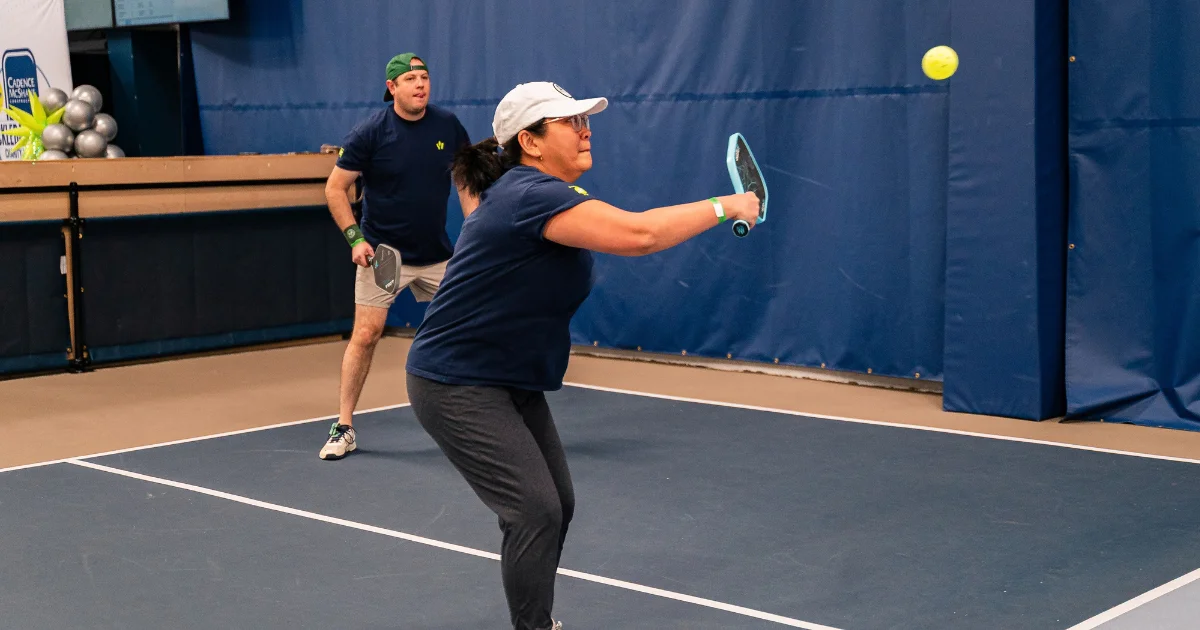
Walk past any park, rec center, or converted tennis court on a weekend morning and you will hear it: the unmistakable pock-pock of a paddle meeting a plastic ball. Pickleball has exploded from a quirky backyard pastime into a sport played by millions of people across the United States and beyond, and it shows no signs of slowing down. From local courts offering Houston pickleball to community facilities across the country, grandparents are trading serves with teenagers, first-timers are hooked after a single game, and new courts seem to appear in every neighborhood.
But as the sport keeps growing, a question keeps surfacing at courtside: who created pickleball, and why? The answer is a surprisingly charming story involving three friends, a group of bored kids, a summer afternoon, and a few pieces of borrowed equipment. Let’s step back to 1965 and uncover how this beloved game really began, where its unusual name came from, and what its humble roots can teach the players of today.
The Summer of 1965: How Pickleball Began on Bainbridge Island
The pickleball origin story begins in the summer of 1965 on Bainbridge Island, Washington, a short ferry ride from Seattle. Joel Pritchard, a congressman who would later serve as Washington’s lieutenant governor, had returned home after a round of golf. Also on hand were his friends Bill Bell, a successful businessman, and Barney McCallum. What they found was a problem every parent knows well: restless children with nothing to do. Nothing about the afternoon suggested history in the making; it was simply a group of families looking to have fun.
The Pritchard property had an old badminton court, so the group decided to play. There was just one hitch: nobody could find the shuttlecock. Instead of giving up, the adults started improvising. They rummaged through the garage and came up with a perforated plastic ball, similar to a Wiffle ball, along with a few ping-pong paddles. Because the plastic ball bounced far better on pavement than a feathery shuttlecock ever could, they lowered the net to about 36 inches at the sides and started experimenting.
What began as a way to entertain the kids quickly became something the grown-ups wanted to play, too. Over the following weekends, Pritchard, Bell, and McCallum refined the rules, kept the compact 20-by-44-foot badminton court, and added the now-famous non-volley zone to stop players from smashing every ball at the net. They wanted a game that anyone in the family could enjoy, regardless of age or athletic ability. That founding idea still lives in every match today, from beginner rallies at the neighborhood park to the fast-growing Houston pickleball scene, where players of every level show up to play.
Read Related: When Was Pickleball Invented
How Pickleball Got Its Name
Ask ten players how pickleball got its name and you may hear ten different answers. Two stories dominate the conversation, and both are told with plenty of affection. The first comes from Joan Pritchard, Joel’s wife. As the game took shape, she thought the mix of borrowed ideas reminded her of the “pickle boat” in competitive rowing, the crew made up of leftover oarsmen from other boats. Pickleball was a similar blend, borrowing pieces from badminton, tennis, and ping-pong, so the name felt like a perfect fit.
The second story is even more adorable: Pickles, the family’s cocker spaniel. The tale goes that the dog would chase wayward balls and run off with them, so the game was named in his honor. It is easy to see why this version is so popular. Who doesn’t love a canine mascot?
So which one came first? Historically, the pickle boat explanation holds the stronger claim. Pickles the dog didn’t join the Pritchard household until about 1968, a few years after the game was invented. In other words, the dog was most likely named after the sport, not the other way around.
Whichever version you prefer, the name did something important: it made the sport feel friendly. Nobody feels intimidated by a game called pickleball, which is a big reason beginner pickleball classes fill up so quickly. That lighthearted branding welcomed newcomers who might have hesitated to pick up a racket sport, and it still gives the game its playful personality today. Even the terminology, from the “kitchen” to the “dink,” carries that same humor.
From Backyard Invention to Official Sport
Needing better gear than small ping-pong bats, woodworker Barney McCallum crafted plywood paddles in his basement. These provided the control and durability the sport required.
In 1967, the first permanent pickleball court was constructed at Bob O’Brian’s home. Word of the sport spread rapidly throughout the Pacific Northwest. To protect and grow the sport, the founders created Pickle-Ball, Inc. in 1972 to supply equipment. By 1976, the first tournament was hosted at Tukwila’s South Center Athletic Club in Washington, demonstrating its competitive power.
Momentum built over the following decades. Community centers, retirement communities, and school gym classes embraced the game because of its gentle learning curve. In 1984, the United States Amateur Pickleball Association formed to organize rules and growth, and it later became USA Pickleball. By 1990, the sport had reached all 50 states. Since then, better paddle technology, professional tours, televised matches, and international federations have carried the game around the world. In 2022, Washington State even named pickleball its official state sport, a fitting honor for the place where it all began. Today, whether you’re joining open play or searching for a pickleball coach near me to sharpen your skills, you’re stepping into a story that began with a few homemade paddles.
Why the Origin Story Matters for Today’s Players
The story of who created pickleball is more than trivia. It reveals the spirit behind the game. Pritchard, Bell, and McCallum weren’t trying to invent the next great professional sport. They wanted something a whole family could play together on a single afternoon using whatever they had lying around. That DNA of accessibility, laughter, and togetherness is why pickleball feels so different from many other racket sports.
You can see that legacy on every court today. A retired teacher partners with a college student. A parent rallies alongside their child. Strangers become friends during a rotation of doubles. Because the court is compact and the rules are simple, almost anyone can be rallying within their first hour. Local communities keep that tradition alive by building courts, hosting open play, and welcoming beginners with open arms.
Of course, a friendly game can still be a challenging one. Once you’re hooked, you’ll probably want to sharpen your dinks, third-shot drops, and footwork. Personalized coaching is a smart next step for players who want honest feedback, and a good coach can build your confidence while keeping the fun front and center. That balance of improvement and enjoyment is very much in the spirit of the original game.
Carry the Legacy Onto the Court
The legacy of Joel Pritchard, Bill Bell, and Barney McCallum is a reminder that great things can start with a bored afternoon and a little creativity. Three friends turned borrowed paddles, a plastic ball, and a lowered net into a worldwide community that keeps growing every year. Their invention succeeded because it invited everyone in. Their story proves you don’t need fancy gear or years of experience to fall in love with this game, only curiosity and a willingness to play.
Now it’s your turn to carry that story forward. Grab a paddle, find a court, and bring a friend or two. Whether you’re taking your first swing or fine-tuning a competitive game, the pickleball community has a spot for you. At Casa Pickle, we celebrate the same welcoming spirit that began on Bainbridge Island, and we’d love to see you on the court. Step in, start rallying, and help write the next chapter of pickleball’s story.