
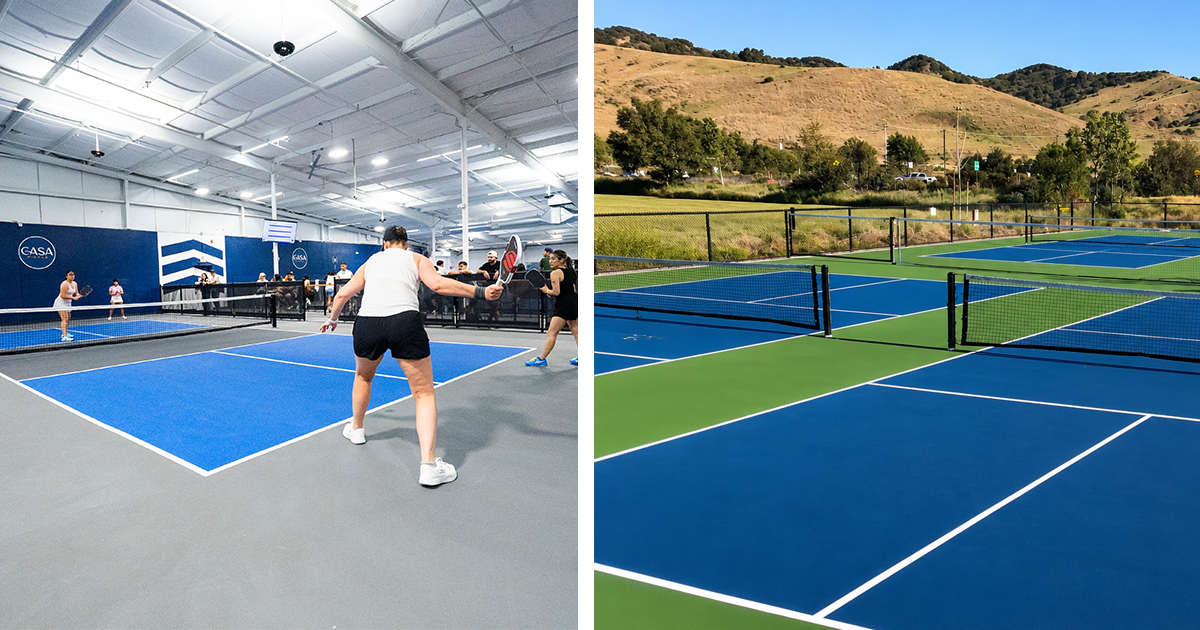
If you’re new to pickleball or trying to improve your game, understanding the difference between indoor vs outdoor pickleballs can make a huge impact on your performance.
The type of ball you use affects speed, bounce, control, and durability on the court. Whether you’re searching for pickleball courts near me or getting ready for competitive play, choosing the right pickleball matters more than most players realize.
In this blog, we’ll break down the major differences between indoor and outdoor pickleballs, how they affect your game, and which option is best for your playing style.
What Is the Difference Between Indoor and Outdoor Pickleballs?
The main difference between indoor and outdoor pickleballs comes down to design and performance. Outdoor pickleballs are built to handle wind, rough court surfaces, and faster gameplay, while indoor pickleballs focus more on control and softer play on smooth courts.
5 Major Differences Between Indoor vs Outdoor Pickleballs
1. Number of Holes
One of the easiest ways to identify indoor vs outdoor pickleballs is by looking at the holes.
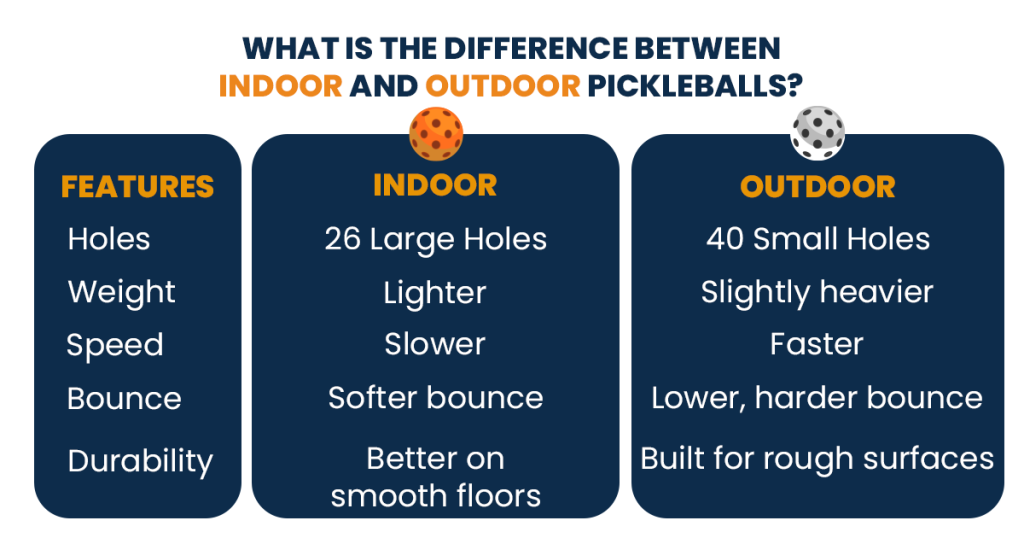
Indoor pickleballs usually have around 26 larger holes, while outdoor pickleballs commonly feature 40 smaller holes. The extra holes on outdoor balls help reduce wind interference and improve stability during outdoor matches.
Indoor balls prioritize control and softer movement because indoor courts are protected from weather conditions.
2. Hole Size and Ball Design
Hole size directly affects ball flight and gameplay.
Indoor pickleballs have larger holes, allowing the ball to move slower through the air. This creates softer rallies and better control for players.
Outdoor pickleballs use smaller holes to reduce drag and maintain a straighter flight path in windy conditions. This makes outdoor gameplay faster and more aggressive.
3. Weight and Bounce
Outdoor pickleballs are slightly heavier than indoor balls. That extra weight helps them stay stable on outdoor courts, especially when wind becomes a factor.
Indoor pickleballs are lighter and produce a higher, softer bounce on gym floors or wooden courts. Many beginners prefer indoor balls because they feel easier to control during rallies.
If you enjoy fast-paced shots and stronger drives, outdoor pickleballs may suit your game better.
4. Hardness and Playing Speed
Another key difference between indoor and outdoor pickleballs is hardness.
Outdoor balls are harder and firmer, which creates faster gameplay and quicker reactions. Competitive players often prefer outdoor pickleballs because they allow for more power and spin.
Indoor balls are softer and quieter. They slow the game down slightly and make extended rallies easier, especially for recreational players.
5. Durability and Weather Resistance
Outdoor pickleballs are designed for rough surfaces like concrete and asphalt courts. They can handle tougher playing conditions but may crack over time because of heat, cold weather, and hard impacts.
Indoor pickleballs usually last longer on smooth indoor surfaces because they experience less friction and stress.
If you regularly play outside, investing in durable outdoor pickleballs is important for long-term performance.
How Indoor vs Outdoor Pickleballs Affect Your Game
1. Indoor Pickleball Performance
Indoor pickleballs create slower gameplay with softer control. This makes them ideal for:
- Beginners learning the game
- Longer rallies
- Precision shots and placement
- Recreational indoor matches
2. Outdoor Pickleball Performance
Outdoor pickleballs produce faster rallies and stronger shots. They are best for:
- Competitive games
- Windy conditions
- Outdoor hard courts
- Power-focused players
Indoor vs Outdoor Pickleballs: Can You Switch Between Them?
Yes, you can technically use indoor pickleballs outdoors and outdoor balls indoors, but performance will suffer.
Using indoor pickleballs outside often causes problems because lighter balls are affected by the wind easily. They also wear out faster on rough outdoor courts.
Outdoor pickleballs used indoors may feel too hard and fast for smooth gym floors, making control more difficult.
For the best experience, players should match the ball type to the court surface and environment.
Which Pickleball Is Better for Beginners?
For most beginners, indoor pickleballs are easier to learn with because they move slower and offer better control.
However, if you mainly play on outdoor courts, practicing with outdoor pickleballs is important because tournament play typically uses outdoor balls.
The best option depends on where you play most often:
- Indoor courts → Indoor pickleballs
- Outdoor courts → Outdoor pickleballs
Upgrade Your Game with Casa Pickle
Understanding the differences between indoor vs outdoor pickleballs helps you choose the right ball for your court, playing style, and skill level. The right choice directly impacts control, speed, and consistency, making your overall game more enjoyable and competitive.
If you want the best pickleball experience, the environment you play in matters just as much as the ball you use. Casa Pickle offers premium, professionally designed courts that help players experience the game the way it’s meant to be played. Explore more at Casa Pickle and elevate your gameplay with the right setup and perfect playing conditions.