
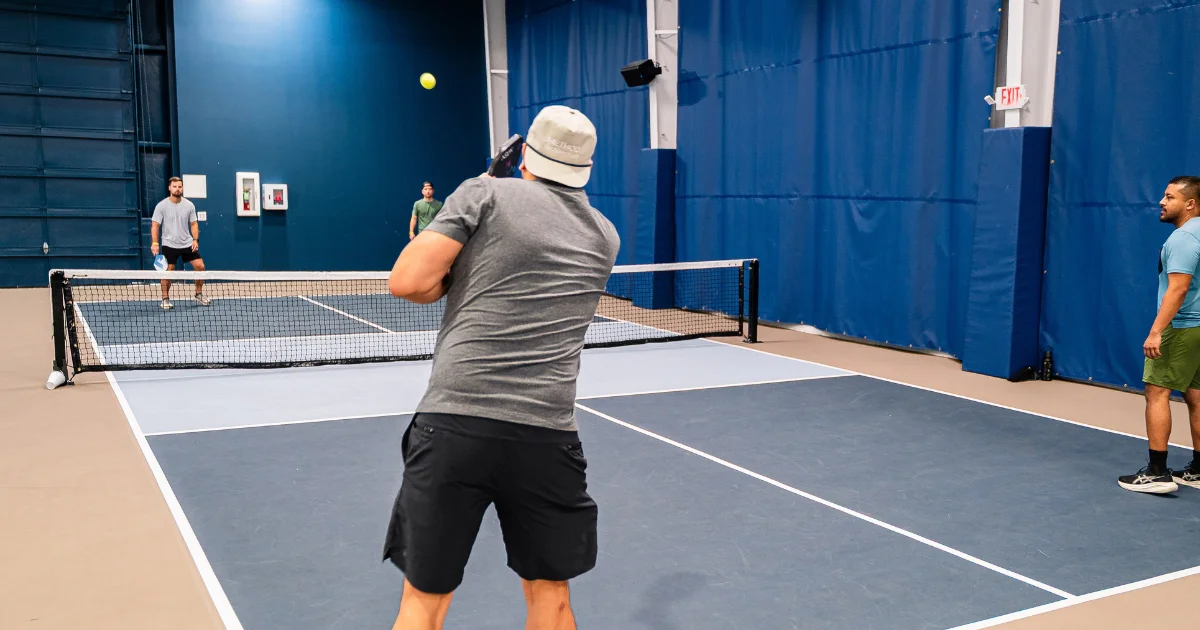
Every pickleball player eventually has a moment when the court stops looking like a rectangle of painted lines and starts feeling like a puzzle. Why did that dink land just short of the kitchen? Why did a serve that looked perfect sail long? The answer almost always comes back to geometry. The size of the court, the height of the net, and the placement of every line quietly shape how points unfold and how quickly beginners can enjoy a real rally, whether they are playing Houston pickleball or stepping onto a court anywhere else.
So, why do pickleball court dimensions matter for your game? Because knowing the measurements is one of the fastest ways to improve your positioning, sharpen your shot selection, and avoid frustrating faults. In this guide, we will walk through how big a pickleball court is, what each zone does, and how those numbers influence strategy, fairness, and fun for players at every level.
The Standard Pickleball Court: A Quick Blueprint
A regulation pickleball court measures 20 feet wide and 44 feet long, the same footprint as a doubles badminton court. That size applies to both singles and doubles, so you never have to relearn the boundaries when you switch formats. Lines are two inches wide, and a ball that lands on a boundary line is considered in.
For perspective, a doubles tennis court measures 36 by 78 feet. A pickleball court covers roughly a third of that area, which is why many tennis facilities can fit two pickleball courts and some layouts squeeze in four. Less ground to cover means more reaction time, more rallies, and more time spent at the net. For players of different ages and fitness levels, that compact size is a huge part of why the game feels so welcoming.
A net splits the court into two equal halves of 22 feet each. On each side, the space breaks into two parts: the non-volley zone, better known as the kitchen, which extends 7 feet back from the net, and the area behind it, which is divided by a centerline into two service courts. Each service court is 10 feet wide and 15 feet deep. The recommended total playing area, including room to run, is 30 by 60 feet, so players can chase lobs and retrieve wide shots without crashing into a fence.
Standardization is what makes the sport portable. Whether you are at a park down the street or a packed indoor facility, the same measurements apply, so your instincts travel with you. That consistency is a big reason the Houston pickleball community can host everything from casual open play to organized tournaments, with players stepping onto unfamiliar courts and feeling right at home.
The Kitchen: Why Seven Feet Changes Everything
If one measurement defines pickleball, it is the seven-foot non-volley zone. Players cannot hit a volley, meaning a ball struck out of the air, while standing in the kitchen or touching its line. You can step in to play a ball that has bounced, but you must exit before volleying again.
That single rule keeps the game from turning into a smash fest at the net. Without the kitchen, a tall player could plant at the line and end every point with an overhead slam. With it, players must rely on patience, touch, and placement. Dinks, drops, and soft resets become the tools of the trade, which is why a shorter player with great hands can hold their own against a taller, more powerful opponent.
Knowing the zone is seven feet deep also gives you a built-in ruler. When the ball bounces near the kitchen line, you can judge whether to step in and attack, or hang back and reset. Many beginners commit foot faults simply because they lose track of the line, especially when momentum carries them forward after a volley. Practicing your footwork with the line as a reference keeps you balanced and stops you from handing out free points. That awareness is a major focus of beginner pickleball classes, where new players learn to read the lines long before they worry about fancy shots.
Net Height and Serve Geometry
The net is just as important as the lines. It stands 36 inches high at the sidelines and 34 inches at the center, so it sags slightly in the middle. That two-inch difference is a hidden strategy tip. The center is the lowest and safest place to aim when you need to clear the tape, and hitting there also keeps your ball well away from the sidelines.
The serve is where geometry gets especially interesting. Every serve must travel diagonally and clear the kitchen entirely before landing in the opposite service court. That leaves you a target only 10 feet wide and 15 feet deep. A serve that lands just past the kitchen line is legal but easy to attack, while a deep serve near the baseline, 22 feet from the net, pushes your opponent back and buys you time to move forward. Understanding that window makes serving less of a guessing game and more of a repeatable skill.
Width matters as well. Because the court is only 20 feet across, a well-placed crosscourt dink can drag an opponent wide and open up the middle for your next shot. The narrow layout is also why doubles partners must communicate constantly, since each partner covers only about ten feet of width, and one hesitant moment can leave the middle open.
Read Related: Can You Play Pickleball on a Tennis Court?
How the Numbers Shape Your Strategy
Put the measurements together, and a clear game plan emerges. The baseline sits 22 feet from the net, while the kitchen line sits just 7 feet away. Your goal on most points is to move from the back of the court to the kitchen line, because the team that controls that space usually controls the point. That’s the logic behind the third-shot drop, a soft shot from the baseline that lands in the opponent’s kitchen and gives your team time to advance. The distances are what make it necessary, and what makes it work.
Court awareness also builds consistency. Players who know exactly how far the baseline is, how deep the kitchen runs, and how much width they need to cover can make faster, calmer decisions. If you have ever searched for a pickleball coach near me, look for someone who uses those markings as teaching tools, with cones, targets, and drills that turn abstract dimensions into muscle memory. A good coach will help you practice hitting to specific zones, so the court’s geometry works for you instead of against you.
Setting Up Your Own Court at Home
Dimensions matter beyond official courts, too. If you want to play in a driveway or on a shared tennis court, accurate measurements keep your practice honest. Mark out a 20-by-44-foot rectangle with painter’s tape or chalk, then measure 7 feet from where the net will stand to draw the kitchen lines. Set the net to 36 inches at the sides and 34 inches in the middle, and add the centerline behind the kitchen. Leave as much space around the court as you can, ideally the recommended 30 by 60 feet, so you can move freely and stay safe.
Shared courts deserve a quick note as well. Many parks paint pickleball lines directly over tennis surfaces, so several sets of lines may overlap. Before your first serve, take a moment to identify which lines belong to pickleball, and you’ll avoid confusing arguments about whether a ball was in or out.
Master the Court, Master the Game
So, why do pickleball court dimensions matter for your game? Because every measurement, from the 20-by-44-foot footprint to the seven-foot kitchen and the 34-inch net center, shapes fairness, strategy, and the friendly, fast-paced rallies that make pickleball so addictive. Learn the numbers, and you will move better, choose smarter shots, and enjoy the game more.
Ready to put that knowledge to work? At Casa Pickle, we welcome players of every age and skill level, from first-timers learning where the kitchen line is to seasoned competitors sharpening their third-shot drops. Step onto the court, trust the lines, and let the game do the rest. Your next great rally is waiting, and our community can’t wait to play with you.