
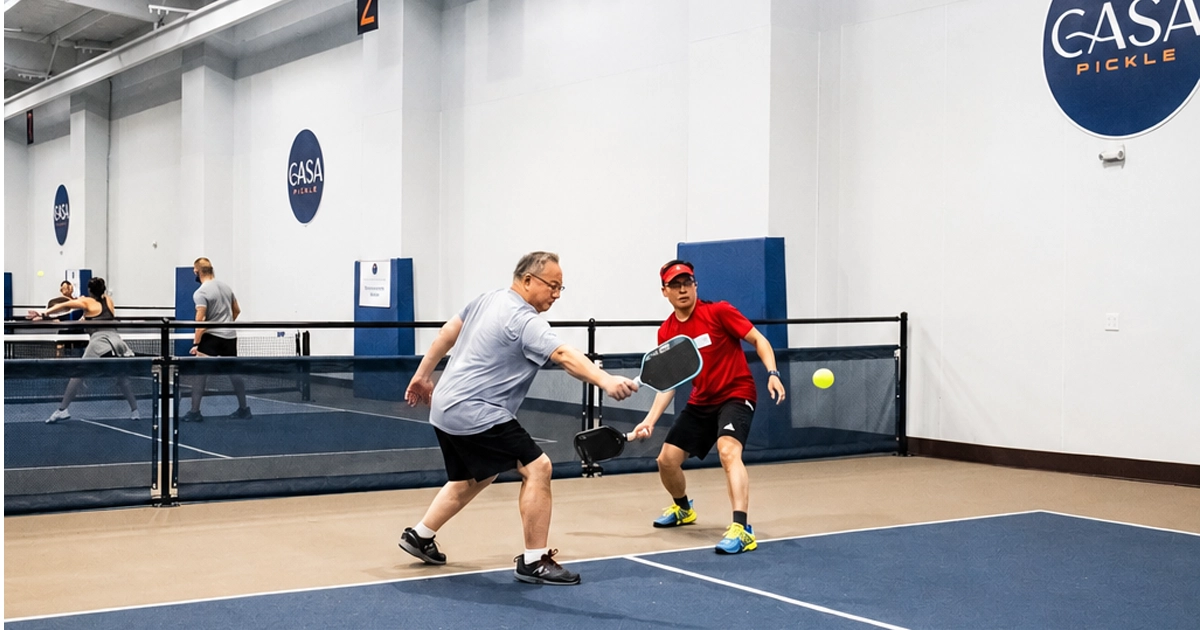
Improving at pickleball requires more than simply playing matches. While game experience is valuable, targeted practice helps players develop the consistency, control, and court awareness needed to perform at a higher level. This is where drills become one of the most effective tools for improving your skills. Whether you’re searching for pickleball near me or already playing regularly, structured drills can help you build the fundamentals needed to elevate your game.
Whether you are new to the sport or working toward tournament competition, the right pickleball drills can strengthen every aspect of your game. From footwork and reaction time to dinking and serving accuracy, structured drills help players build confidence and develop habits that translate directly into match play.
Why Pickleball Drills Matter
Pickleball drills focus on repeating specific movements and shots in a controlled environment. Unlike recreational games where opportunities can be unpredictable, drills allow players to work on particular skills until they become second nature. Participating in pickleball classes provides structured practice that helps reinforce these techniques and accelerate overall skill development.
Regular drilling helps players:
- Improve shot consistency: Repeating the same strokes helps players hit cleaner, more accurate shots with fewer unforced errors during rallies.
- Build muscle memory: Constant repetition trains the body to automatically perform correct swings, grips, and timing without overthinking.
- Develop faster footwork: Drills improve movement patterns so players can quickly adjust position and reach the ball more efficiently.
- Increase reaction speed: Practicing controlled returns and fast exchanges helps players respond quicker to unexpected shots.
- Strengthen court positioning: Players learn where to stand during different situations, improving coverage and reducing open spaces.
- Improve decision-making during rallies: Repetitive scenarios help players choose better shots under pressure.
Even a short drill session before open play can produce noticeable improvements over time.
Essential Pickleball Drills for Skill Development
These drills target some of the most important skills required for successful pickleball play. Practicing them regularly can help players become more confident and consistent during matches. Working with a pickleball coach near me can help you refine these drills, correct technique, and improve your performance more efficiently.
1. Dinking Drill
This drill focuses on soft, controlled shots near the net where players exchange low-paced dinks back and forth. It trains touch, patience, and accuracy so players can keep the ball in play without giving attacking chances.
To perform this drill:
- Stand at the non-volley zone with a partner.
- Exchange soft dink shots back and forth.
- Aim to keep the ball low over the net.
- Focus on consistency rather than power.
Regular dinking practice helps players control rallies and create opportunities to force mistakes from opponents.
2. Third-Shot Drop Drill
The third-shot drop is one of the most strategic shots in pickleball. It allows the serving team to transition from the baseline to the kitchen line while neutralizing the opponent’s advantage.
To practice:
- Start near the baseline.
- Have a partner feed balls toward you.
- Hit soft arcing shots that land in the opponent’s kitchen.
- Focus on placement and consistency.
Mastering this drill can significantly improve your ability to gain control of points early in a rally.
3. Serve and Return Drill
This drill works on starting points with strong, accurate serves and consistent deep returns. Players practice placement and timing so they can set up better positions early in each rally.
During the drill:
- Alternate serving and returning.
- Aim for deep shots near the baseline.
- Practice targeting different areas of the court.
- Focus on maintaining proper mechanics.
Consistent serving and returning often provide a competitive advantage before the rally fully develops.
4. Volley Reaction Drill
Players stand close to the net and exchange quick volleys without letting the ball bounce. This improves reflexes, paddle control, and the ability to handle fast-paced exchanges during real matches.
To perform this drill:
- Stand across from a partner at the non-volley zone.
- Exchange rapid volleys without allowing the ball to bounce.
- Maintain a ready position throughout the drill.
- Focus on short, controlled paddle movements.
This exercise helps players react more effectively during high-speed net battles. Practicing at well-run pickleball facilities also provides regular coaching and game-like play to reinforce these skills.
5. Footwork and Recovery Drill
This focuses on movement patterns like reaching different court areas and quickly returning to ready position. It builds balance, speed, and positioning so players can cover the court more effectively during play.
Practice by:
- Starting in the center of the court.
- Moving to various corners on command.
- Returning to the ready position after each movement.
- Maintaining balance throughout the exercise.
Improved footwork often leads to better court coverage and more consistent shot execution.
Drills for Improving Accuracy and Consistency
As players become more comfortable with basic skills, accuracy becomes increasingly important. Consistently placing shots in the right areas can create pressure and force opponents into mistakes.
Target Practice Drill
Players place cones or markers on different areas of the court and try to hit those spots using serves, dinks, or groundstrokes. It trains precision and helps players learn how to place the ball exactly where they intend instead of just returning it.
Benefits include:
- Improved shot placement
- Better control under pressure
- Increased confidence during matches
Cross-Court Rally Drill
In this drill, players rally diagonally across the court to keep the ball in play for longer exchanges. It improves shot control, encourages safer angles, and helps reduce mistakes by focusing on steady placement instead of risky shots.
Focus on:
- Maintaining longer rallies
- Keeping shots within boundaries
- Controlling pace and placement
This drill teaches patience and reduces unforced errors during competition.
Also read: How to play Pickle Ball.
Common Mistakes Players Make During Drills
Avoiding common practice errors helps players improve faster and get more value from each session. Focused training leads to better skill development over time.
- Prioritizing power over consistency: Many players try to hit hard shots instead of focusing on control, which leads to more mistakes and weaker rally performance.
- Performing drills without a clear objective: Practicing without a goal makes sessions less effective, as players repeat actions without targeting specific skills or improvements.
- Ignoring footwork fundamentals: Poor movement habits reduce balance and positioning, making it harder to reach shots and maintain control during play.
- Practicing too quickly without proper technique: Rushing through drills often breaks form, which prevents players from building strong and reliable shot mechanics.
- Failing to simulate realistic game situations: Drills that don’t reflect actual match conditions make it harder to transfer skills into real competitive play.
The most effective drills emphasize quality repetitions rather than quantity.
Tips for Getting More Out of Your Practice Sessions
Consistent, focused practice improves skills more than irregular long sessions. Short, purposeful training with clear goals leads to faster and more reliable improvement over time.
Helpful habits include:
- Set a specific goal for each practice session: Instead of trying to work on everything, focus on one or two skills like dinking or serves so practice stays clear and effective.
- Prioritize technique before speed: Good form should come first because it builds control and accuracy; speed can be added later once movements feel stable.
- Track your progress over time: Noting improvements in consistency or accuracy helps you see what is working and what still needs attention.
- Practice with players of different skill levels: Playing stronger or weaker opponents exposes different styles, helping you adapt and improve faster in real situations.
- Include both drills and match play: Drills build skills in a controlled setting, while match play helps apply those skills under real pressure and game conditions.
The players who improve the fastest are often those who balance repetition, feedback, and purposeful practice.A pickleball membership gives you consistent access to courts, practice sessions, and opportunities to improve your skills through regular play.
Improve Your Game at Casa Pickle
Practicing effective pickleball drills is one of the fastest ways to improve consistency, confidence, and overall performance. Whether you are working on dinking, serving, footwork, or advanced strategies, structured practice can accelerate your development and help you perform better during matches.
Casa Pickle in Houston offers 26 premium indoor courts, professional coaching programs, skill-development clinics, and open play opportunities designed to help players improve at every level. Whether you are just starting out or preparing for competitive play, Casa Pickle provides the coaching, facilities, and training environment needed to elevate your game.