
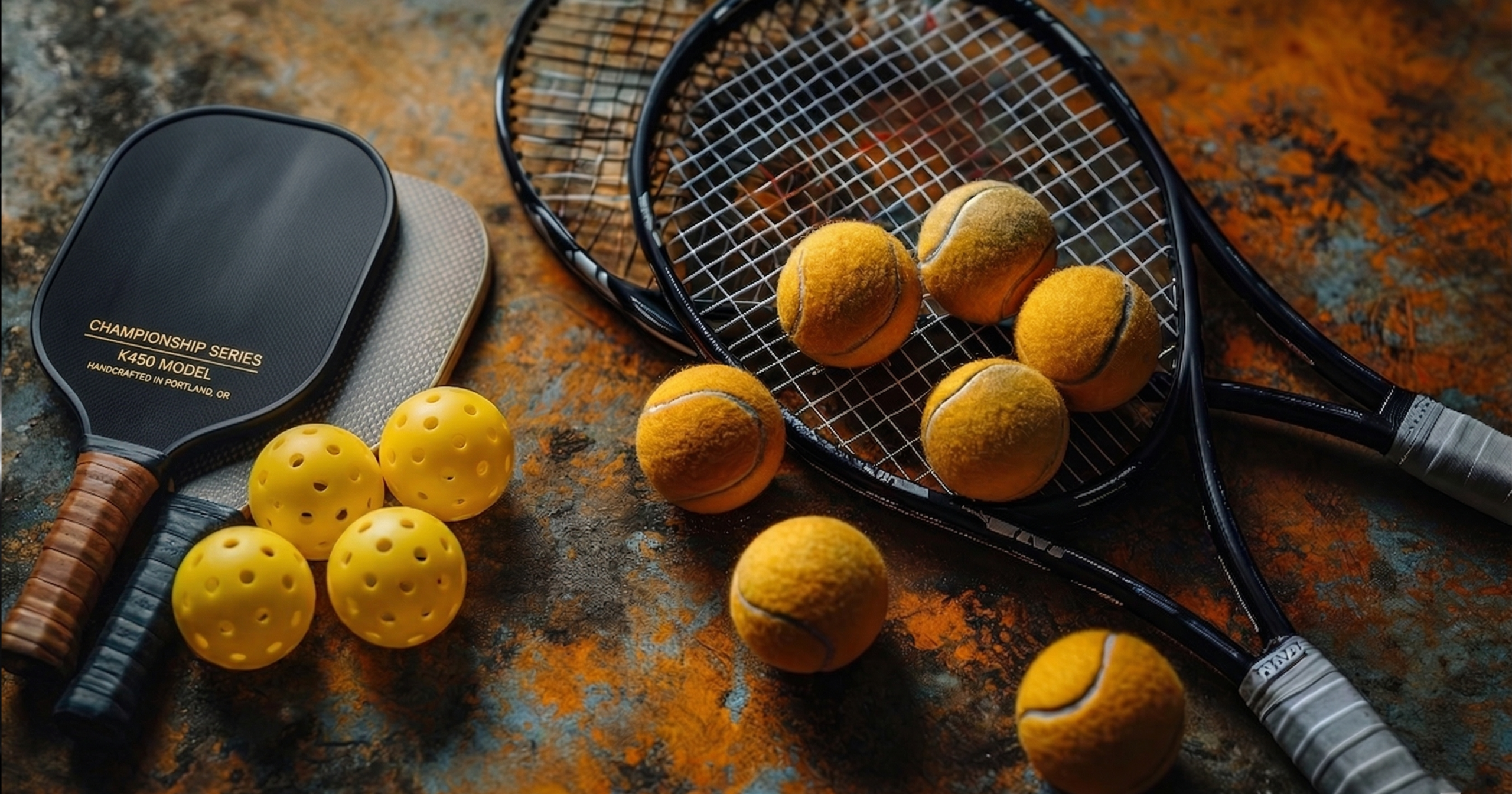
When it comes to racquet sports, two games stand out: pickleball and tennis. Both sports involve hitting a ball back and forth with a racquet or paddle, but that’s where the similarities end. As the popularity of pickleball courts near me continues to skyrocket, many people are curious about how it compares to tennis in terms of gameplay, equipment, and physical demands.
Understanding the differences between these two sports can help players choose the one that best fits their lifestyle, fitness level, and preferences. Below, we break down each sport and compare its key features to give you a clear picture of how they differ.
1. What is Pickleball?
Pickleball is a fast-growing racquet sport that blends elements of tennis, badminton, and ping-pong. It is known for its simplicity, smaller court size, and accessibility, making it a popular choice among beginners and recreational players.
- Played with a solid paddle and a perforated plastic ball
- Can be played as singles or doubles
- Court size: 20 feet by 44 feet
- Rally-based scoring system
- First to 11 points (win by 2)
- Popular for all ages due to its low-impact nature
- A widely growing sport, especially in the United States
Pickleball’s easy-to-learn rules and social nature have contributed to its rapid rise in popularity across parks, gyms, and recreational centers.
2. What is Tennis?
Tennis is a traditional and globally recognized racquet sport with a long history. It is more physically demanding than pickleball and is played on a larger court with faster-paced gameplay and more complex scoring rules.
- Played with stringed rackets and a pressurized tennis ball
- Can be played in singles or doubles
- Court size varies (singles and doubles layouts)
- Uses 15, 30, 40 scoring system
- Matches are played in sets
- Includes major tournaments like Wimbledon and the U.S. Open
- Established professional and global presence
Tennis remains one of the most popular sports worldwide, with millions of recreational and professional players competing at various levels.
3. Court Size and Layout
Court size is one of the most noticeable differences between pickleball and tennis. The dimensions directly affect gameplay, movement, and overall strategy in each sport.
Pickleball Court Size
- Measures 20 feet wide and 44 feet long
- Includes a 7-foot non-volley zone (“kitchen”) near the net
- Net height: 36 inches at sidelines, 34 inches at center
- Smaller court allows quicker reactions and less running
- Focus on control and placement rather than power
Tennis Court Size
- 78 feet long for both singles and doubles
- 36 feet wide for doubles, 27 feet for singles
- Net height: 3 feet at center, 3.5 feet at posts
- No restricted zones like the kitchen
- Requires greater stamina and court coverage
4. Equipment Used: Paddles vs Rackets
The equipment used in pickleball and tennis differs significantly, influencing how each game is played and how the ball behaves during rallies.
Pickleball Equipment
- Solid paddles made of wood, composite, or carbon fiber
- Smaller and lighter than tennis rackets
- No strings, designed for control and precision
- Hollow plastic ball with holes (similar to a wiffle ball)
- Slower ball speed and lower bounce
Tennis Equipment
- Stringed rackets of varying sizes and weights
- Designed for power, spin, and control
- Pressurized felt-covered tennis ball
- Faster ball speed and higher bounce
- Larger sweet spot for hitting powerful shots
5. Game Rules and Scoring
Rules and scoring systems differ greatly between pickleball and tennis, affecting how the game flows and how points are earned.
Pickleball Rules
- An underhand serve is required
- Ball must bounce once on each side before volleys begin
- Non-volley zone (“kitchen”) restricts net play
- Points are only scored on serve
- Games are typically played to 11 points (win by 2)
- Doubles format allows both players to serve before switching
Tennis Rules
- Overhand serve is standard
- No restrictions on volleying at the net
- Uses 15, 30, 40 scoring system
- Games require four points to win
- Matches played in best-of-three or best-of-five sets
- Includes deuce and advantage scoring
6. Physical Demands and Fitness
The physical demands of pickleball and tennis differ significantly due to court size, pace, and style of play. Each sport offers its own level of fitness benefits depending on intensity.
Pickleball’s Fitness Demands
- Low-impact sport with less strain on joints
- Smaller court reduces the running distance
- Improves agility, balance, and hand-eye coordination
- Suitable for older adults and beginners
- Can still provide a good cardio workout
Tennis’ Fitness Demands
- Requires greater stamina and endurance
- Larger courts demand more movement and coverage
- Involves sprinting, jumping, and explosive actions
- Higher impact on joints and muscles
- Suitable for players seeking intense physical activity
7. Popularity and Global Reach
Both sports are popular worldwide, but tennis has a longer-established global presence, while pickleball is rapidly growing, especially in recent years.
Pickleball’s Rise
- Invented in 1965
- One of the fastest-growing sports in the U.S.
- Popular among all age groups, especially seniors
- Expanding internationally in countries like Canada, Mexico, and Australia
- An increasing number of courts and tournaments globally
Tennis’ Global Reach
- Played worldwide for over a century
- Major international tournaments include Wimbledon, the U.S. Open, the French Open, and the Australian Open
- Millions of players across recreational and professional levels
- Strong global fan base and established professional circuit
8. Which Sport Should You Try?
Choosing between pickleball and tennis depends on your personal preferences, fitness level, and goals. Both sports offer unique benefits, so the right choice varies from person to person.
- Age and fitness level: Pickleball is easier on the body, while tennis requires more endurance
- Social aspect: Pickleball is often more community-driven and beginner-friendly
- Court availability: Pickleball courts are smaller and easier to set up, while tennis courts require more space
Pickleball vs Tennis: Both Have Their Unique Appeal
While pickleball and tennis may seem similar at first glance, they each offer distinct playing experiences. Pickleball is more accessible, low-impact, and social, while tennis provides a more physically demanding and competitive environment with a long-standing global tradition. The growing popularity of community spaces like Casa Pickle further highlights how pickleball culture is expanding and bringing people together around the sport.
Ultimately, the choice depends on your goals and preferences. Whether you enjoy the fast-paced rallies of tennis or the relaxed, social gameplay of pickleball, both sports offer great opportunities for fitness, fun, and engagement.